For the Powerful, Getting Away With It Is the Prize
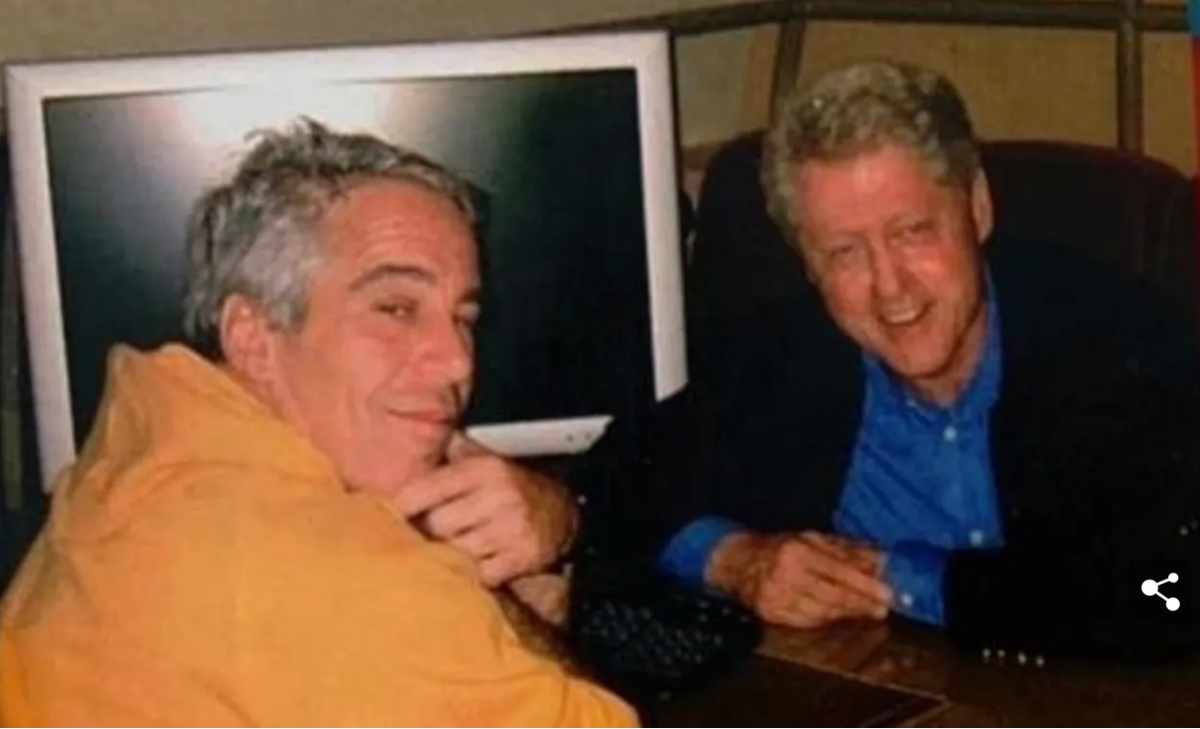
I vividly recall the moment when Bill Clinton “did not have sexual relations” with Monica Lewinsky. It was the late 1990’s. I was an aspiring actress tending bar at a Manhattan gentlemen’s club. My customers were wealthy, mostly married men seeking attention from younger women.
Between what I learned from my customers, my own live-in relationships, and my mother’s three marriages, I was already familiar with the pitfalls of holy matrimony. The expectation of lifelong monogamy struck me as unrealistic. And I certainly didn’t imagine Bill Clinton was having sex with Hillary. Obviously, he was satisfying those needs elsewhere.
Still, I was surprised he’d hook up with one of his interns. Why risk his career for someone so seemingly ordinary?
It became a popular topic of conversation at my bar. And people were brutal. No one was surprised by the infidelity. The affiar itself barely registered. What shocked people was Monica. The men openly called her a “pig.” Surely, they argued, the Leader of the Free World could do better.
That was the part I found revealing. Nobody was troubled that Clinton had cheated on his wife. They were troubled that he had risked everythig for someone they considered unremarkable.
I imagined Clinton to be just like my customers only more powerful, with more of a public image to protect. Many of my customers lived outside New York, yet they’d never visit a strip club in their own cities.
“That’s too close to home,” they’d say.
Clinton couldn’t exactly stroll into a gentlemen’s club. I assumed someone like him would be quietly shuttled to discreet locations and introduced to beautiful, carefully vetted companions. In my mind, men like Clinton conducted their affairs far from home—maybe even outside the country’s borders, on a private island somewhere.

Clearly, 1998-Me understood some things about powerful men.
But there was something I couldn’t fathom back then that seems glaringly obvious now. Jeffrey Epstein once remarked that Bill Clinton “likes them young.” Crude as it was, the statement no longer surprises me.
I was raised by a broke single mom who was herself raised by a broke single mom. Growing up, I absorbed a particular worldview: one wrong move can destroy you. Be careful. Don’t make mistakes. I was taught a lot of fear as a kid.
So I was struck by how differently my customers approached life. To them, it was a game. They weren’t trying to avoid mistakes. They were trying to score points, level up, and see what they could get away with.
As a bartender, customers tried to convince me to dance. Years later, when I became a dancer, they offered money to meet them in their hotel rooms.
“Oh honey, you’re in the wrong place,” I’d tell them. “This is a strip club. What you’re looking for is a prostitute.”
“Ohhh no, no, no, no, no!” they’d reply. “I don’t want a prostitute.”
“Well, if I do what you just suggested, what does that make me?”
They’d think about this for a moment and then ask “well, what if I don’t pay you?”
At this point we’d both laugh and move on.
Over time, I realized my customers truly didn’t want a prostitute. Anyone can call an escort service. Where’s the challenge in that? Where’s the fun?
Epstein’s clients were powerful men, much like my own customers. Only the stakes were higher. Many were politicians.
What do politicians actually do every day? They raise money. This isn’t a secret. Politicians themselves often complain that so much of their time is consumed by fundraising.
And when they aren’t fundraising, they’re campaigning—trying to persuade people to trust them with power.
Seen through this lens, politics is a game of earning and maintaining trust.
What they do with that trust after it’s earned isn’t nearly as important. The public has a remarkably short memory. Politicians can half-ass the policymaking aspect of their jobs and still win votes during the next campaign cycle. They spend years learning how to earn the public’s trust. But that’s not the same as being trustworthy.
Maybe to ensure elected officials serve the public, we need to figure out how to gamify policymaking. But I digress.
Epstein’s client list included businessmen, royalty, and academics — people whose careers depend on influence. These types excel at persuading others. Epstein himself convinced billionaires to trust him with their money. Clearly, he was adept at the art of persuasion.
Epstein and his crew could have hired professional, fully grown women. But that’s too easy. Now, luring unsuspecting teenagers into their bedrooms? That requires skill. That requires real determination. They even had to admit their own limitations and put a woman on the team.
When Epstein and his clients abused underage girls, they were playing their favorite game, flexing their strongest muscles. Gathering for underage orgies wasn’t about the sex. It was about congratulating themselves.
It was their Oscars. Their Grammys.
Participation itself was the prize. It meant you were the best of the best—getting away with the worst of the worst behavior.
For chrissakes, these guys were so good, they even convinced the U.S. Department of Justice to cover for them.
I have spent a lot of time around these types of men. For many years I worked in a club with a popular steak house. One night, a long banquet table of finance guys raised their glasses to “being at the top of the food chain.”
That toast has stayed with me.
The Epstein Files reveal just how far this mindset extends. The details may differ, but the worldview is consistent: life is a game, other people are pieces on the board, and the highest status belongs to those who can get away with the most.
The Epstein class is global.
Getting away with it requires a lot of cooperation from the rest of us.